Whole exome sequencing has become a cornerstone method in genomics research, clinical genetics, and translational medicine. As sequencing costs have continued to decline, the practical question for more laboratories is no longer whether to use WES, but which capture approach best fits their specific program — a commercially available exome kit with validated protocols and fixed content, or a custom whole exome sequencing probe set engineered to the exact requirements of the study.
The answer is not universal. It depends on genomic content requirements, sample type, study population, scale, and the degree of protocol flexibility the laboratory needs. This guide provides a structured framework for evaluating each factor, grounded in the technical realities of hybridization capture performance and the specific capabilities of Dynegene's WES probe platform.
What Whole Exome Sequencing Involves
Whole exome sequencing uses hybridization capture to selectively enrich the protein-coding regions of the genome — collectively termed the exome — from a fragmented and adapter-ligated DNA library. The enriched fraction is then sequenced at high depth.

Although the human exome represents approximately 1% of the total genome by sequence mass, it harbors approximately 85% of known disease-associated variants with established phenotypic effects. This concentration of functional variation within a small genomic fraction is the primary rationale for WES over whole-genome sequencing in many research and clinical contexts: it enables high-depth variant detection across the most informative sequence space at substantially lower sequencing cost per sample.
The capture step itself — the hybridization of biotinylated probes to target sequences and pulldown using streptavidin magnetic beads — is technically identical whether a commercial kit or custom probe set is used. What differs is the content of the probe set, how that content was designed, and how the probe chemistry handles challenging sequences such as GC-rich exons, repeat-adjacent regions, and clinically relevant gene families with complex genomic architecture.
What Commercial Exome Kits Provide
Commercial whole exome sequencing kits are pre-designed, validated probe sets distributed as complete reagent systems. They cover a defined target region — typically the canonical protein-coding exons of RefSeq-annotated genes — and are delivered with optimized hybridization protocols, performance documentation, and technical support. For many standard applications, this combination of validated content and streamlined deployment is entirely appropriate.
The fundamental limitation of a commercial kit is that its content is fixed at the time of manufacture. The probe sequences, tiling strategy, and target region boundaries cannot be modified by the end user. For programs whose scientific questions align with the standard exome content, this is not a constraint. For programs that need to go beyond that content — adding non-coding regulatory regions, covering disease-specific intronic variants, or extending to a non-human genome — a commercial kit cannot accommodate the requirement regardless of how it is used.
What Dynegene's Custom WES Probes Offer
Dynegene provides a versatile portfolio of whole exome sequencing probe solutions designed to address both standard and specialized research requirements. The product line spans from validated standard panels to fully custom configurations.
The QuarXeq Human All Exon Probes 3.0 is Dynegene's standard whole exome panel. According to the official product page, key specifications include:
- Designed based on the latest RefSeq, CCDS, and GENCODE databases, achieving nearly 99.5% coverage of core exonic coding regions
- Advanced hybrid probe strategy combining high-performance dsDNA probes (enabled by single-base parallel amplification labeling technology) with chip-synthesized ssDNA probes
- AI-driven probe design and boosting strategies that achieve a better bait-to-target ratio, enhancing capture specificity and uniformity while reducing sequencing burden and overall cost
- Optimized for oncology research with enhanced coverage of 1,000+ cancer-related genes, gene fusions, MSI, HRD, and HLA regions (~46 Mb total target region)
- Full-transcript coverage for over 40 frequently mutated complex genes for improved detection of complex variants and rare diseases
- Industry-leading GC bias control, exceptional on-target rates even at high coverage depths, and highly confident variant detection
- High data consistency, ideal for large cohorts and long-term research
Beyond the standard panel, Dynegene supports flexible spike-in of customized target content for programs that need to extend standard exome coverage. For projects requiring a fully bespoke configuration, the same AI-driven probe design pipeline and hybrid probe synthesis infrastructure support completely custom panel development from user-provided target coordinates.
The Whole Exome Sequencing Probes product page notes that Dynegene's WES portfolio covers genetic disease research, oncology companion diagnostics, pharmacogenomics, large-scale cohort studies, species identification, and paleogenomics — reflecting the breadth of applications the platform is designed to support.
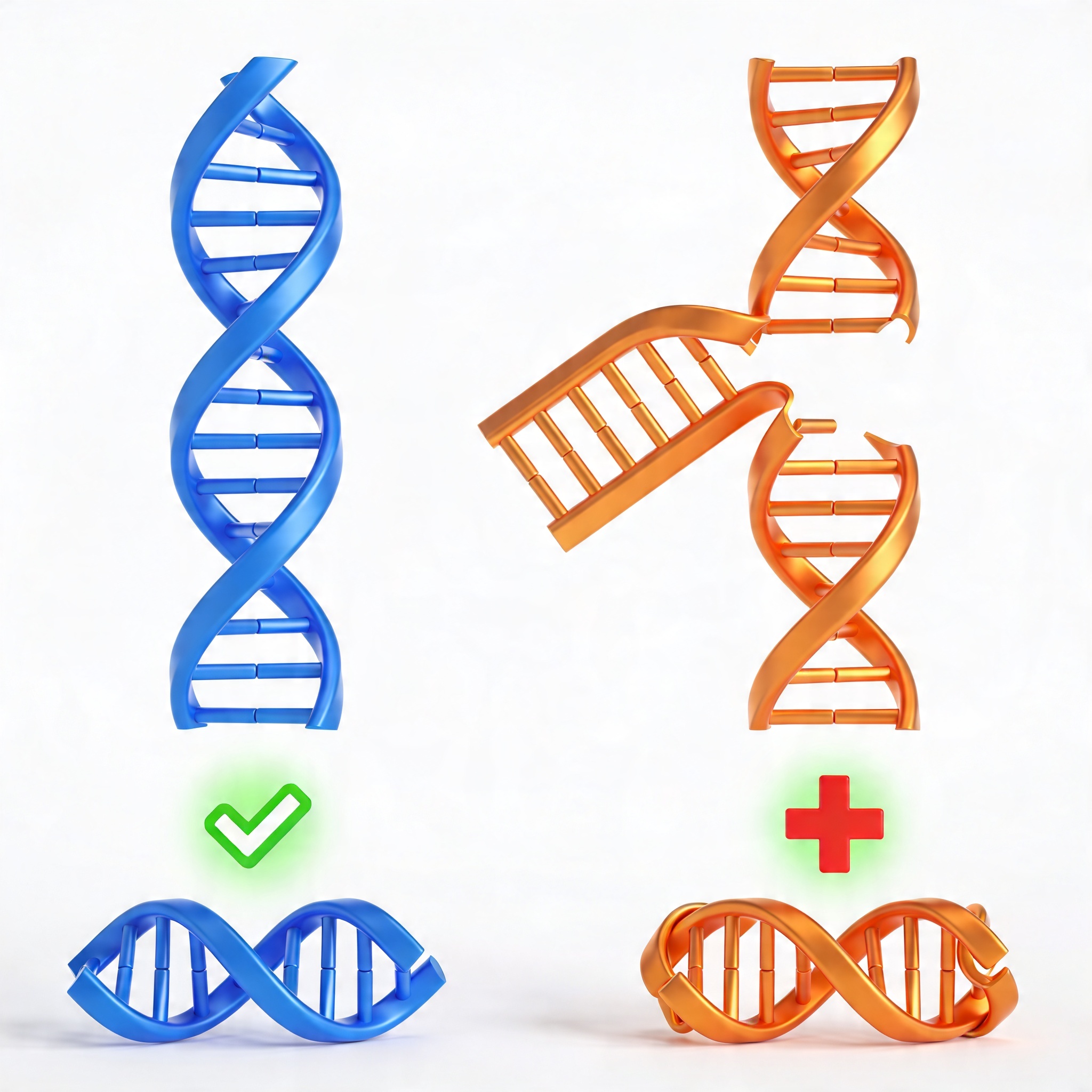
Decision Dimensions: A Structured Comparison
Evaluating the choice between a commercial exome kit and a custom probe set requires examining each relevant dimension independently rather than treating the decision as a single binary choice.
Genomic Content Requirements
The standard exome annotation covers canonical protein-coding exons as defined by RefSeq, CCDS, and GENCODE. For many research programs, this content is sufficient. However, increasingly common scientific questions require target content that falls outside the standard exome:
- Deep intronic splice-altering variants: Variants in intronic regions 10 to 100+ bp from the canonical splice site that alter splicing through creation of cryptic splice sites or disruption of splicing regulatory elements are increasingly recognized as disease causes, particularly in rare disease and oncology. These positions are not covered by standard exome probes.
- Regulatory region variants: Promoter, enhancer, and UTR variants that affect gene expression cannot be detected by exome capture that covers only the CDS. For programs where expression-altering non-coding variants are within scope, custom spike-in probes covering these regions are required.
- Gene fusion breakpoints: Gene fusions that underlie specific cancer types often occur within intronic regions. Standard exome probes covering only exons miss the intronic breakpoint, which means that fusion-supporting reads spanning the breakpoint junction will not be enriched. Dynegene's QuarStar Pan-Cancer Fusion Panel 1.0 addresses this specifically for oncology applications.
- HRD genomic signatures: Homologous recombination deficiency is assessed from copy number variation patterns across the genome, not just coding exon variant calls. Dynegene's HRD Panel provides dedicated probe coverage for HRD genomic signature detection.
- Non-human and pathogen genomes: Commercial exome kits are human-specific and cannot be used for model organisms, agricultural species, or pathogen genomics. Custom probe design on Dynegene's platform supports non-human target content.
Sample Type and Input Quality
The performance of a hybridization capture panel is directly affected by the quality and fragment size distribution of the input DNA library. Commercial exome kits are validated primarily for high-quality genomic DNA extracted from fresh tissue or cell lines. Performance on challenging samples varies and is often not comprehensively documented by kit vendors.
The relevant sample categories and their probe design implications are:
FFPE-derived DNA: Formalin fixation introduces cross-links and chemical modifications including cytosine deamination (C→U transitions). FFPE libraries have shorter fragment size distributions (often median 150–200 bp compared to 300–400 bp for gDNA) and higher damage artifact rates. For FFPE samples, increased probe tiling density compensates for reduced capture efficiency from shorter fragments, and dsDNA probe strategy provides more consistent hybridization across the fragment length range. Dynegene's DNA Library Preparation Kit is specifically validated for FFPE, cfDNA, and gDNA inputs.
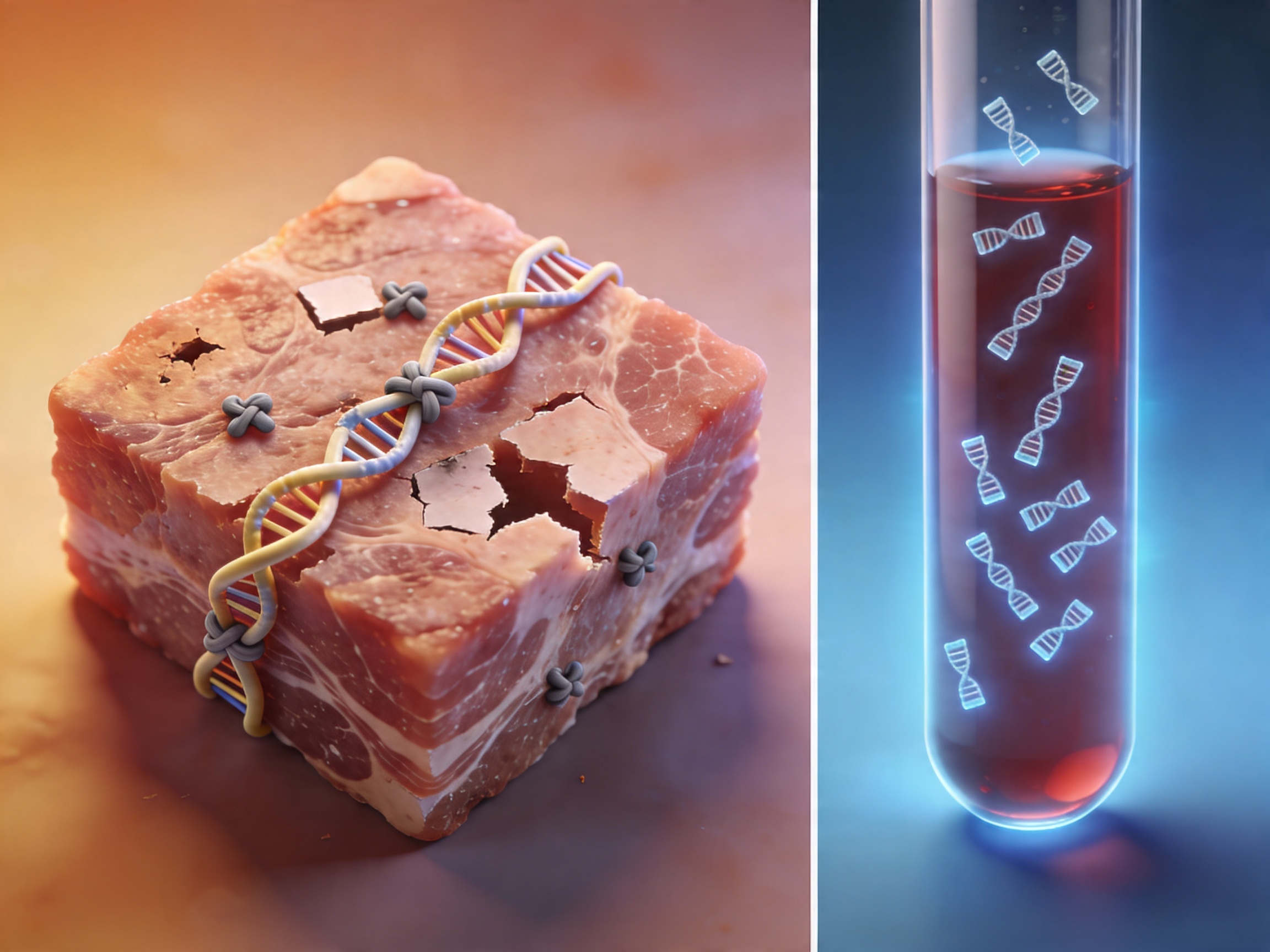
Cell-free DNA (cfDNA): cfDNA from plasma consists predominantly of mononucleosomal fragments of approximately 160–200 bp. Low-input mass and short fragment length require high capture efficiency to avoid losing rare target sequences. For liquid biopsy applications where circulating tumor DNA detection at low allele fractions is the goal, on-target rate requirements are more stringent than for standard WES because sequencing depth drives variant detection sensitivity.
Low-input samples: Single cells, needle biopsy material, and archival samples with limited DNA availability require probe sets designed to minimize off-target capture, because off-target reads consume sequencing capacity that is at a premium when input is constrained.
Population and Ancestry Considerations
Reference genome assemblies and the variant databases used to design most commercial exome kits are derived predominantly from European ancestry populations. This matters for two reasons. First, variants that are common in non-European populations may be absent from the reference design and therefore not considered in probe positioning decisions. Second, population-specific pathogenic variants documented in population-relevant databases (e.g., HGMD entries based on East Asian or African cohort studies) may not be in regions well-covered by probes designed against a European-dominant reference set.
Custom probe design allows population-specific variant sites and disease-relevant loci characterized in the relevant population to be incorporated as spike-in content, ensuring that the panel is optimized for the specific cohort rather than defaulting to a European-reference design.
Cost at Scale
The cost structure of commercial kits versus custom probe sets reverses as sample volume increases. Commercial kits have a low upfront cost (no synthesis investment) but a fixed per-sample reagent cost that scales linearly with sample number. Custom probe sets have a higher upfront synthesis cost but a lower per-sample reagent cost once the lot is produced, because the synthesis cost is amortized across all samples that use the lot.
For a program running 50 samples, the upfront synthesis cost of a custom panel may not be justified. For a program running 500 to 5,000 samples, the math often favors custom synthesis — particularly if the custom panel covers a leaner target region that reduces sequencing depth requirements per sample.
A leaner custom panel covering only the gene set directly relevant to the scientific question reduces total target region size, which reduces both the probe count required and the sequencing depth needed to achieve uniform coverage.
Protocol Flexibility and Vendor Independence
Commercial kits are typically designed with specific library preparation chemistries, hybridization buffers, and wash conditions validated together as a system. Substituting components — changing the library preparation reagent, modifying hybridization temperature, or switching from one sequencing platform to another — may compromise kit performance and is not always supported by the kit vendor.
Custom probe sets deliver the probe synthesis product as a reagent that the laboratory incorporates into its own workflow. The probe set is compatible with any validated hybridization buffer and wash system. For core genomics facilities serving multiple investigators, this flexibility is operationally important because different investigators may use different library preparation chemistries or sequencing platforms.
Dynegene's complete workflow reagent ecosystem — including DNA Library Preparation Kit, QuarHyb Super DNA Reagent Kit, Dynegene Blocker Family and Streptavidin magnetic beads— provides a validated end-to-end workflow for Dynegene probe products while remaining compatible with standard library preparation approaches used by research laboratories.
Understanding the Performance Metrics That Matter
Before committing to any WES probe platform — commercial or custom — the following performance metrics should be reviewed and compared against the application's requirements.
|
Metric
|
Definition
|
Relevance
|
|
On-target rate
|
% sequenced reads mapping to probe-targeted regions
|
Primary indicator of probe specificity; directly determines effective sequencing cost
|
|
Coverage of annotated genes
|
% of RefSeq/CCDS/GENCODE coding bases covered at minimum depth
|
Determines whether rare variant detection is complete across all targeted genes
|
|
Uniformity (0.2× mean)
|
% target bases covered at ≥20% of mean depth
|
High uniformity allows lower mean depth to achieve complete coverage breadth
|
|
GC bias
|
Coverage variation across GC content deciles
|
Determines whether GC-rich clinically relevant exons are adequately covered
|
|
Coverage breadth at depth threshold
|
% target bases at ≥20×, ≥50×, or ≥100×
|
Application-dependent; germline variant calling typically requires ≥20×; somatic calling typically requires ≥100×
|
|
Duplicate rate
|
% PCR duplicate reads
|
Elevated in cfDNA and low-input samples; high duplicate rate reduces effective depth
|
Dynegene's official product page documents the following specifications for the QuarXeq WES platform:
- Nearly 99.5% coverage of core exonic coding regions based on the latest RefSeq, CCDS, and GENCODE databases
- Industry-leading GC bias control
- Exceptional on-target rates even at high coverage depths
- Superior uniformity
- High data consistency for large cohorts and long-term research
These specifications are relevant not only to the standard QuarXeq product but also to custom and spike-in panels built on the same probe design and synthesis platform.
When to Choose a Commercial Exome Kit
A standard commercial whole exome kit is the appropriate choice when:
- The scientific question requires broad coding variant discovery across a well-characterized human cohort, and the standard exome content covers the relevant genes
- Rapid deployment is required and upfront design investment is not feasible within the project timeline
- The laboratory lacks the bioinformatics capacity to manage a custom annotation pipeline and prefers a vendor-defined target coordinate set
- The project is a pilot study where the exact target content will be refined based on preliminary results
- Regulatory or compliance requirements favor a validated commercial reagent with documented performance history across multiple laboratories
When to Choose Custom WES Probes
A custom whole exome sequencing probe set is the appropriate choice when:
- Coverage of non-coding regions, splice sites, deep intronic variants, or regulatory elements is scientifically required
- The study population has population-specific variant considerations not addressed by a standard European-reference design
- Sample types are challenging (FFPE, cfDNA, low-input) and benefit from probe design optimization specific to those input characteristics
- The program runs at a scale where per-sample cost reduction from a leaner custom panel justifies the upfront synthesis investment
- The application involves non-human genomes, pathogen sequences, or specialized target content for which no commercial panel exists
- Protocol flexibility is required to accommodate different library preparation workflows across multiple investigators or platforms
Dynegene WES Probe Portfolio
Dynegene's WES product line covers the full spectrum from standard validated panels to fully custom configurations:
- QuarXeq Human All Exon Probes 3.0: Standard whole exome panel with 36 Mb total target region.
- Fully custom WES panel: Complete custom design from user-provided BED coordinates, using the same AI-driven probe design pipeline and hybrid synthesis platform.
- QuarStar Pan-Cancer series: For programs focused on oncology where pan-cancer gene panel content plus fusion detection and HRD coverage is required.
- Comprehensive Exome Solutions: Dynegene provides a versatile portfolio of human whole-exome solutions designed to meet diverse research and clinical needs.
For technical consultation on which configuration is appropriate for a specific research program, Dynegene's team is available through the Contact page. Published performance comparisons, including a peer-reviewed study from Shanghai Jiaotong University comparing whole exome sequencing capture probe performance across platforms, are available in the Citation and References section.
A Pre-Decision Checklist
Before finalizing the choice between a commercial kit and a custom probe set, work through these questions. Each one has a direct consequence for which format is more appropriate:
- Does the standard exome content cover every genomic region that is scientifically relevant to the study question — including any non-coding, intronic, or regulatory regions?
- What sample types will be processed, and are they routinely handled by the commercial kit with documented performance?
- What is the projected total sample number for the program, and does the scale justify custom synthesis investment?
- Does the study population require population-specific variant content or extended coverage of loci not well-represented in European-reference annotations?
- What on-target rate and uniformity specifications are required for the downstream variant calling approach and acceptable variant allele fraction threshold?
- Is protocol flexibility required, or is vendor-guided protocol adherence preferred?
- Does the program require integration with adjacent assays — HRD assessment, fusion detection, liquid biopsy somatic calling — that benefit from a coordinated probe design within a consistent technology platform?


 NGSHybridization Capture Probe NGS custom probes MRD custom probes QuarStar Human MethylCap Panel QuarStar Liquid Pan-Cancer Panel 3.0 QuarStar Pan-Cancer Lite Panel 3.0 QuarStar Pan-Cancer Fusion Panel 1.0 QuarStar Pan Cancer Panel 1.0 QuarStar Pan-Cancer Panel 1000-Gene QuarStar HLA Panel QuarXeq HRD panel QuarXeq Mitochondrial Probes Whole Exome Sequencing Probes QuarStar Human All Exon Probes 4.0 (Heredity) QuarStar Human All Exon Probes 4.0 (Tumor) QuarStar Human All Exon Probes 4.0 (Standard) QuarXeq Human All Exon Probes 1.0 (RNA) QuarXeq Human All Exon Probes 3.0 (RNA) Library Preparation DNA Library Preparation Kit Fragmentation Reagent mRNA Capture Kit rRNA Depletion Kit QuarPro Superfast T4 DNA Ligase Dynegene Adapter Family Hybridization Capture QuarHyb Super DNA Reagent Kit QuarHyb DNA Plus3 Reagent Kit QuarHyb DNA Reagent Kit Plus QuarHyb One Reagent Kit QuarHyb Super Reagent Kit Pro Dynegene Blocker Family QuarHyb DNA Reagent Kit Pro(Methyl) Multiplex PCR QuarMultiple BRCA Amplicon QuarMultiple PCR Capture Kit 2.0 PathoSeq 450 Pathogen Library Corollary Reagent Streptavidin magnetic beads Equipment and Software The iQuars50 NGS Prep System
 Primers and Probes
 RNA SynthesissgRNA miRNA siRNA
 Gene
Gene Oligo Pools
 CRISPR sgRNA Library
 Antibody Library
 Variant Library




 Tel: 400-017-9077
 Address: Floor 2, Building 5, No. 248 Guanghua Road, Minhang District, Shanghai
 Email:
 Tel: 400-017-9077
 Address: Floor 2, Building 5, No. 248 Guanghua Road, Minhang District, Shanghai
 Email: