Whole exome sequencing (WES) and targeted next-generation sequencing (NGS) rely on hybridization capture probes to selectively enrich regions of interest from genomic DNA libraries. The choice of probe chemistry, panel design, and coverage strategy directly determines data quality, variant detection sensitivity, and per-sample cost.
This guide provides a deep technical comparison of DNA and RNA probe technologies, explains the differential capture depth strategy that is reshaping clinical WES economics, and maps Dynegene's full probe portfolio to specific research and clinical applications.
The Science of Hybridization Capture
How NGS Capture Probes Work
In hybridization capture, biotinylated probes complementary to target genomic regions are hybridized with a fragmented DNA library. Probe-target duplexes are then captured using streptavidin-coated magnetic beads, while off-target sequences are washed away. The enriched library is sequenced, providing deep coverage of target regions at a fraction of the cost of whole genome sequencing (WGS).
Two probe chemistries dominate the market: double-stranded DNA probes and double-stranded RNA probes. Each has distinct thermodynamic and practical advantages.
DNA Probes: High Throughput, AI-Optimized Design
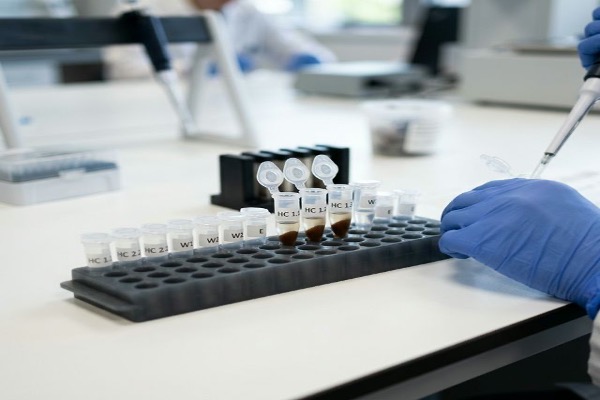
Dynegene's Hybridization Capture DNA Probes use high-performance double-stranded DNA probe synthesis technology. The key advantage of DNA probes is their compatibility with high-throughput synthesis on Dynegene's DYHOW platform, which can synthesize up to 4.35 million oligonucleotide sequences on a single chip. This enables rapid custom panel development and cost-effective manufacturing.
The latest generation — the QuarStar Human All Exon Probes 4.0 — incorporates AI model-based probe design algorithms that optimize both capture specificity and uniformity. Combined with proprietary Boosting strategies, these algorithms streamline probe regions while enhancing capture performance and significantly reducing detection costs.
RNA Probes: Superior Sensitivity Through Binding Strength
Dynegene's double-stranded RNA probes exploit a fundamental principle of nucleic acid chemistry: RNA-RNA hybrids have higher binding strength than RNA-DNA or DNA-DNA hybrids. This thermodynamic advantage translates directly into improved capture sensitivity.
Key differentiators of Dynegene's dsRNA probe technology:
- Better sensitivity — Enhanced RNA-RNA hybrid binding strength captures target sequences more efficiently, even from degraded or low-input samples
- Wider coverage — Simultaneous capture of both the sense strand and antisense strand of the target region provides more comprehensive coverage
- Low-frequency mutation performance — The dual-strand capture approach performs well even in detecting low-frequency variants, critical for oncology applications
- Flexible customization — Built on Dynegene's proprietary ultra-high-throughput DNA synthesizer with independent intellectual property rights
Dynegene's Probe Portfolio: Product-by-Product Comparison
DNA Probe Products (QuarStar Series)
QuarStar Human All Exon Probes 4.0 — Standard Version
| Parameter |
Specification |
| Probe type |
Double-stranded DNA |
| Genome coverage |
~35.5 Mb |
| Database design |
Refseq / CCDS / GENCODE |
| Applications |
Genetic disease testing, precision cancer diagnosis |
| Customization |
Spike-in probes for adaptation to different testing requirements |
| Hybridization |
Rapid and overnight; single-plex and multiplex |
| Product page |
detail-427.html |
Highlights from the official product page:
- Excellent performance — Outstanding on-target rate and uniformity, enabling more accurate variant detection
- Flexible combination — Spike-in sub-panels adapt to different testing requirements; the high-throughput synthesis platform enables rapid response to customization needs
- Cost advantage — Requires less sequencing data to achieve the same target depth, reducing per-sample testing costs
- Broad compatibility — Works with rapid and overnight hybridization systems; supports multiplexed sample hybridization
QuarStar Human All Exon Probes 4.0 — Tumor Version
| Parameter |
Specification |
| Probe type |
Double-stranded DNA |
| Genome coverage |
~46 Mb |
| Additional targets |
1,000+ tumor-related genes, fusions, MSI, HRD, HLA |
| Design technology |
AI algorithm-based probe design and Boosting strategies |
| Minimum hybridization |
Ultra-fast: as quick as 30 minutes |
| Product page |
detail-429.html |
The Tumor version is built on the Standard version and represents Dynegene's most feature-rich exome panel. Its defining innovation is differential sequencing depth — a probe design strategy that applies different capture intensities to different genomic regions based on clinical importance.
Differential Depth Performance (at 15G total sequencing data):
| Region Type |
Effective Depth |
| General gene exons |
>150x (~190x) |
| Tumor-related genes |
>450x (~500x) |
| Hotspot regions |
>650x (~900x) |
This approach allows oncologists to get deep, mutation-sensitive coverage where it matters most — at hotspot genes critical for treatment selection — while maintaining adequate exonic depth for comprehensive variant calling, all within a 15G data budget.
Fusion Gene Detection:
The Tumor version includes enhanced design for fusion hotspot genes and their high-frequency intronic regions:
| Fusion Gene |
CDS + Intron Coverage |
| ALK |
~900x |
| ROS1 |
~800x |
| RET |
~1,000x |
| NTRK1 |
~1,000x |
Low-frequency fusion detection has been validated down to 2.08% allele frequency (confirmed by ddPCR).
HRD Detection:
The panel selects 23,157 high-frequency heterozygous SNPs, verified by WGS, with balanced GC content and high specificity, enabling precise detection of genomic scars (LOH, TAI, LST) at sequencing depths consistent with general CDS regions.
Additional DNA Probe Panels
RNA Probe Products (QuarXeq Series)
QuarXeq Human All Exon Probes 3.0
| Parameter |
Specification |
| Probe type |
Double-stranded RNA |
| Database design |
Refseq / CCDS / GENCODE |
| Coverage |
Comprehensive CDS regions including TERT promoter |
| Applications |
Genetic disease detection, precision oncology, immunotherapy |
| Hybridization |
Rapid and overnight; single-plex and multiple-plex |
| Customization |
Different panel modules can be spiked in |
| Product page |
detail-316.html |
The QuarXeq 3.0 is Dynegene's RNA-based whole exome solution. It accounts for common variations in transcript forms and covers challenging genomic regions such as the TERT promoter. The upgraded probes demonstrate comprehensive improvements in capture efficiency and uniformity.
DNA Probes vs RNA Probes: When to Use Which
Choose DNA Probes (QuarStar) When:
- Clinical oncology with WES + tumor profiling — The QuarStar 4.0 Tumor version provides differential depth that gives hotspot genes 4–6× deeper coverage than general exons
- High-throughput clinical labs — DNA probes paired with ultra-fast 30-minute hybridization maximize daily sample throughput
- Budget-sensitive testing programs — The Standard version requires less sequencing data to achieve target depth
- Custom panel development — Dynegene's 4.35M oligos-per-chip synthesis platform enables rapid prototyping of spike-in panels
Choose RNA Probes (QuarXeq) When:
- Maximum capture sensitivity is required — RNA-RNA hybrid binding thermodynamics provide stronger target capture, critical for degraded FFPE samples
- Low-frequency variant detection — Dual-strand capture (sense + antisense) enhances performance for low allele frequencies
- TERT promoter analysis — The QuarXeq 3.0 design explicitly includes this challenging region
Compatible Reagent Kits and Workflow
Hybridization Capture Reagent Kits
Library Preparation and Accessories
Frequently Asked Questions
What is the difference between DNA probes and RNA probes for hybridization capture?
DNA probes use double-stranded DNA to capture targets via DNA-DNA hybridization. RNA probes use double-stranded RNA, forming RNA-RNA hybrids with higher binding strength, resulting in more sensitive capture. Dynegene's dsRNA probes capture both sense and antisense strands simultaneously, providing wider coverage and better low-frequency mutation detection. DNA probes (QuarStar series) excel in high-throughput WES and tumor panels; RNA probes (QuarXeq series) are ideal for maximum sensitivity in genetic disease and precision oncology.
What is differential sequencing depth and how does it reduce costs?
Differential depth applies different capture intensities by region importance. At 15G data, QuarStar 4.0 Tumor achieves: >150x for general exons, >450x for tumor genes, >650x for hotspots — delivering deep mutation-sensitive coverage where it matters most without increasing total sequencing data requirements.
Can Dynegene probes detect gene fusions and HRD?
Yes. The Tumor panel includes fusion hotspot intron coverage at ~800–1,000x depth (ALK, ROS1, RET, NTRK1), detecting fusions as low as 2.08% allele frequency (ddPCR-confirmed). HRD detection uses 23,157 WGS-verified, GC-balanced SNPs for LOH/TAI/LST genomic scar analysis.


 NGSHybridization Capture Probe NGS custom probes MRD custom probes QuarStar Human MethylCap Panel QuarStar Liquid Pan-Cancer Panel 3.0 QuarStar Pan-Cancer Lite Panel 3.0 QuarStar Pan-Cancer Fusion Panel 1.0 QuarStar Pan Cancer Panel 1.0 QuarStar Pan-Cancer Panel 1000-Gene QuarStar HLA Panel QuarXeq HRD panel QuarXeq Mitochondrial Probes Whole Exome Sequencing Probes QuarStar Human All Exon Probes 4.0 (Heredity) QuarStar Human All Exon Probes 4.0 (Tumor) QuarStar Human All Exon Probes 4.0 (Standard) QuarXeq Human All Exon Probes 1.0 (RNA) QuarXeq Human All Exon Probes 3.0 (RNA) Library Preparation DNA Library Preparation Kit Fragmentation Reagent mRNA Capture Kit rRNA Depletion Kit QuarPro Superfast T4 DNA Ligase Dynegene Adapter Family Hybridization Capture QuarHyb Super DNA Reagent Kit QuarHyb DNA Plus3 Reagent Kit QuarHyb DNA Reagent Kit Plus QuarHyb One Reagent Kit QuarHyb Super Reagent Kit Pro Dynegene Blocker Family QuarHyb DNA Reagent Kit Pro(Methyl) Multiplex PCR QuarMultiple BRCA Amplicon QuarMultiple PCR Capture Kit 2.0 PathoSeq 450 Pathogen Library Corollary Reagent Streptavidin magnetic beads Equipment and Software The iQuars50 NGS Prep System
 Primers and Probes
 RNA SynthesissgRNA miRNA siRNA
 Gene
Gene Oligo Pools
 CRISPR sgRNA Library
 Antibody Library
 Variant Library




 Tel: 400-017-9077
 Address: Floor 2, Building 5, No. 248 Guanghua Road, Minhang District, Shanghai
 Email:
 Tel: 400-017-9077
 Address: Floor 2, Building 5, No. 248 Guanghua Road, Minhang District, Shanghai
 Email: